

Looking at Pokhara’s city details
Shift from the wide landscape to streets, building surfaces and the details that reward a closer look.
A city can become difficult to see when every photograph points toward its most famous landscape. Pokhara rewards a change of scale. Put the broad lake view beside a window, a building frontage or the route between two familiar places, and the city begins to feel less like a backdrop.
Keep different places distinct
The Nepal Tourism Board identifies Old Bazaar and Bindyabasini as a named Pokhara area of interest. Use a specific place name when planning and captioning a visit. Lakeside and Old Bazaar are different contexts, and neither should be illustrated with an unnamed photograph from another Nepali city.
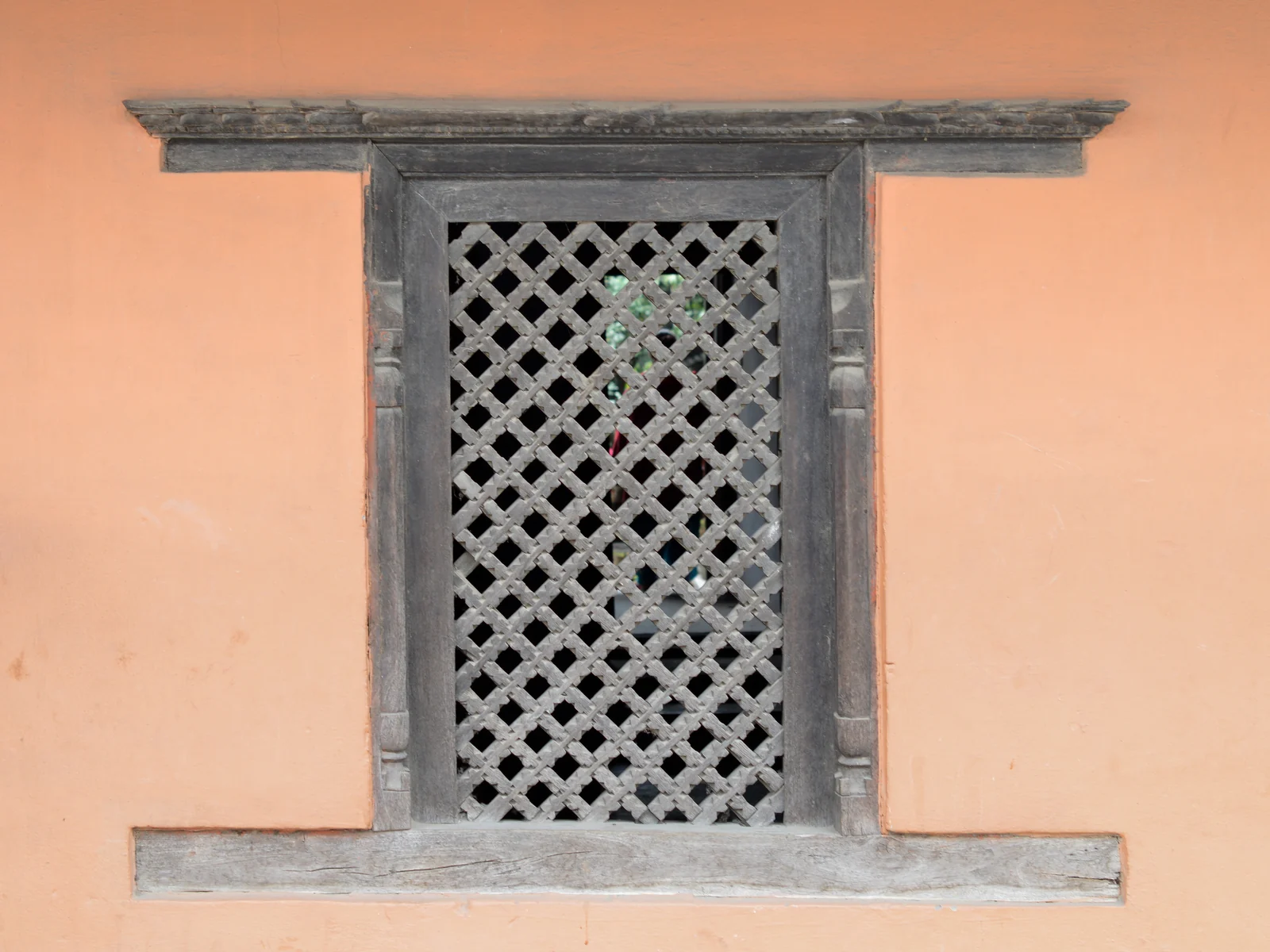
The wooden window shown with this guide is identified by its photographer as Pokhara. It is a city detail, not a claim about a particular Old Bazaar building. That distinction matters: a useful guide should let a picture keep the location information that actually belongs to it.
Look without turning the street into a set
Businesses and homes have purposes beyond a visitor’s photograph. Leave doorways and working space clear, and ask before making a close portrait or photographing a shop interior. If someone explains their work, let their own account lead rather than supplying an imagined story.
- Begin with the building or street as a whole.
- Notice how entrances meet the pavement.
- Look for differences between timber, masonry and newer surfaces.
- Move closer only where doing so is welcome.
- Keep actual lettering intact in photographs.
- Record the place and date for your own captions.
Let a detail be enough
You do not need to identify a style, age or symbolic meaning to appreciate a well-made object. When a fact is uncertain, keep the description plain. Saying what you can see is more useful than attaching an elaborate explanation to a feature you have not researched.
Return to Phewa’s shoreline for the wider view, or use the city-life collection to find further observations as the guide grows. Make the contrast between near and far part of the visit.

Pokhara: Full-Day Sightseeing & Viewpoints Tour – Private/Group
Discover the best of Pokhara on this well-planned sightseeing and viewpoints tour, designed for travelers who want to experience the city’s natural...

Astam Village Day Hike From Pokhara
Astam village is located 20km north-west of Pokhara in the foothills of Annapurna range. It is famous for its eco- l...

Half day hiking to World Peace Pagoda
Get to explore the beautiful forests surrounding Pokhara city and visit the beautiful Peace Pagoda from where you ca...

ZipFlyer Nepal - The World's Steepest Zip-line
Welcome to the most stunning Zipline on the planet. Zipflyer Nepal is a 1.8km Zipline located in Pokhara Nepal with...